CEO Davis Larssen on the challenges and opportunities at home and abroad for British industry

There is still great uncertainty over the future of the North Sea industry
There is a lot to consider for UK firms involved in the energy industry right now. From geopolitical shocks to the drive to net zero and beyond, it is a time of unprecedented change.
In the North Sea, the recent approval of the Jackdaw gas field perhaps signals a new direction for the current government. But the future of the Rosebank field to the north remains uncertain. Proserv has huge experience in this dynamic landscape. The Aberdeen-based controls and monitoring specialist has a centre of excellence in the Middle East and works on projects across all the world’s major energy basins. Energy Voice sat down with Proserv’s CEO, Davis Larssen, to discuss developments and their effect on the UK. The conversation ranged from the challenges at home to the opportunities abroad, and how to make genuine progress in the energy transition.
UK Government and future of the North Sea
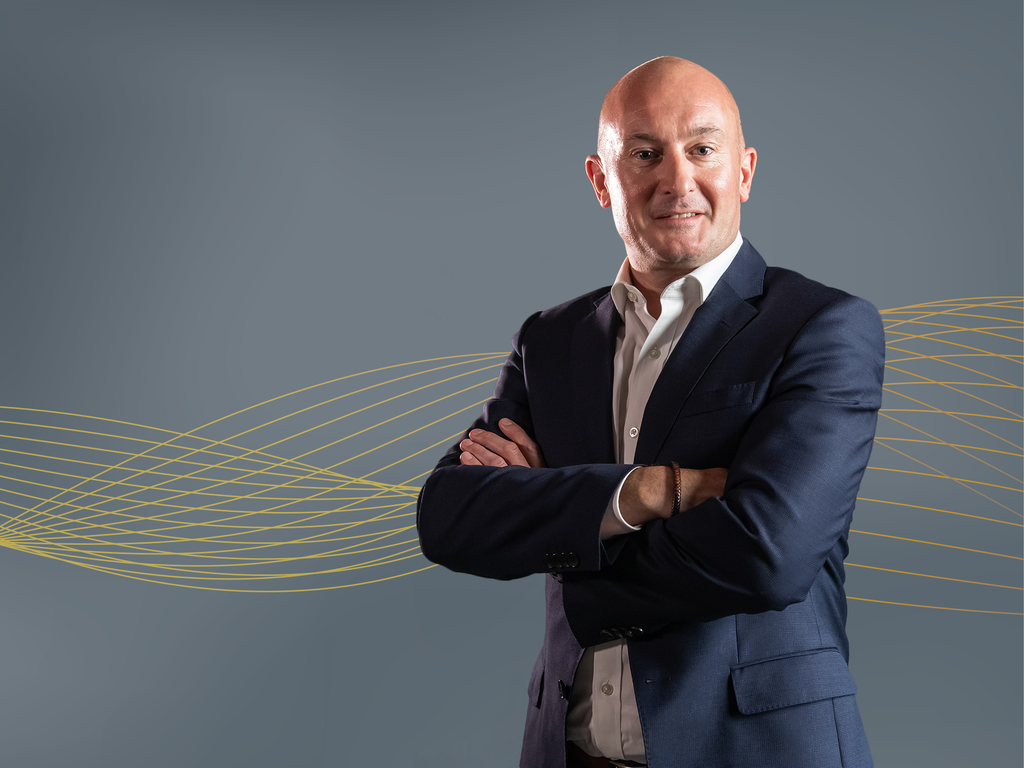
Davis Larssen, CEO of Proserv
As an Aberdeen-headquartered company It would be remiss not to start with getting your view on the UK Government having approved production at the Jackdaw gas field, while maintaining its commitment to net zero and ruling out new exploration licences. Does this signal a more pragmatic approach to the North Sea? What does it tell you about the need for a clearer, longer-term energy policy that gives companies like Proserv the confidence to invest in UK jobs, technology and supply chains?
Jackdaw is a good and positive signal, although it is well overdue. I don’t honestly think it reflects a broader positive or pragmatic policy for the North Sea. The presumption against new exploration licences is not a pragmatic approach, especially when our near neighbours in Norway continue to explore and develop effectively the same energy basin.
It was the only sensible outcome, but I’m worried it does not reflect the pragmatic approach we need, given the geopolitical situation the UK seems to be stuck in under the current government. A lot more needs to be done to establish a clearer, long-term energy policy that will create and sustain investment and jobs in the UK.
Confidence must return
I would definitely like to see Rosebank approved as well. We need to re-instil confidence, so people want to invest in the UK. At the moment, people do not want to put their money here because it is seen as an unstable and volatile financial environment. The UK government’s stance is almost unique among the world’s energy basins, at a time when energy security and self-sufficiency are ever more important because of the conflicts around the world.
I fully support the energy transition, both personally and professionally through Proserv, but you cannot flick a switch overnight. There is a long way to go, and we need a pragmatic, sensible approach. There are not enough jobs in renewables today to absorb the people leaving oil and gas. As activity declines, we risk losing people from the workforce altogether or to other parts of the world where the energy economy is still booming. We risk losing investment and infrastructure as well.
Taking UK expertise to global markets

Proserv’s Dubai hub is one of several facilities across the Middle East
You’ve spoken about the challenges of securing work in the UK North Sea and the need for Proserv’s technology to compete globally. As you prepare to exhibit at ADIPEC, how important are the Middle East and other international markets to Proserv’s growth strategy, and what does the UK need to do to ensure its subsea engineering expertise remains globally competitive?
International markets are very important. The UK is still an important market for us, and we have won work here recently. But five or six years ago, probably 40% of our global revenues came from the UK. Now it is in the high teens at best. It remains critical because it is where the majority of our employees are based and where we are headquartered, but increasingly I spend more time travelling to other energy basins, such as Houston, where I am at the moment. That is where the activity is and where clients want to engage with us.
The Middle East has historically been one of our biggest markets. We have more than 250 employees across the region, so it is critical for several reasons. But it is highly unpredictable at the moment because of the conflict, and my fear is that the local environment may get worse because of the geopolitical situation.
Harder to compete internationally
Other energy markets are also critical: West Africa, the US Gulf, Australia, Southeast Asia and Brazil. They have a very different energy philosophy from the UK’s today.
We build a lot in the UK and sell it overseas, and at the moment we do that quite well. But as UK costs continue to rise, particularly the energy costs of heating and running facilities, it becomes increasingly difficult to compete with companies manufacturing in places such as Brazil and Southeast Asia. If we cannot keep people fully occupied, we risk losing that knowledge base through early retirement or relocation to markets offering more exciting jobs and a vibrant economy.
Ultimately, we need a sign that says the UK is open for business. We need a stable fiscal regime and a 20-year strategic energy policy that, ideally, all political parties would sign up to as being in the UK’s best interests, whoever is in power.
At the moment, energy policy effectively flips every four or five years depending on which party is in government. Consistency of policy is the single biggest thing UK plc can provide to show the rest of the world that this is a place where people should want to do business.
Turning energy-transition ambition into commercial reality
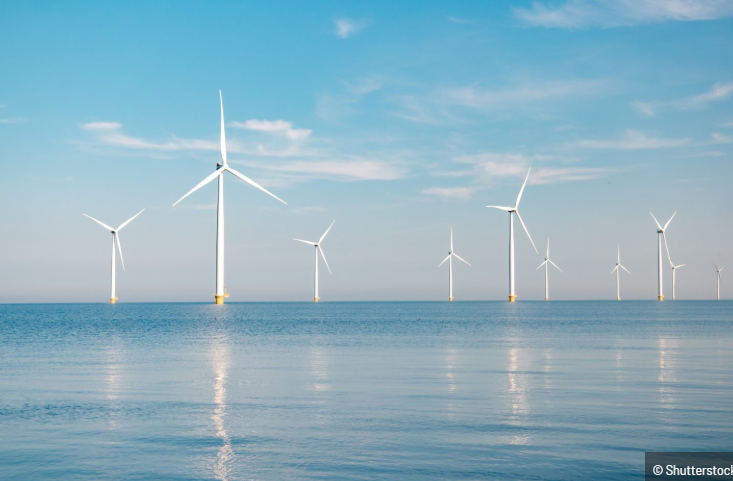
The shift to renewable energy will need to be carefully managed
Proserv has been applying its controls and monitoring expertise across both traditional oil and gas and emerging renewables. With offshore wind projects facing delays and uncertainty in the UK, where do you see the most credible near-term opportunities for technology transfer between these sectors, and what needs to change to turn energy-transition ambitions into commercially viable projects?
It is a tough question. Proserv is doing a lot to support the transition, but ScotWind is a good example of the challenge. The technology and solutions needed to develop offshore wind, particularly floating offshore wind, are still a long way away. There is a huge gap between transferring skills from oil and gas today into renewables tomorrow, and that gap is too big to span at the moment. Even some renewables operators are having to cut back because they cannot get the technology needed to develop parts of the market.
Both the UK and the US have been quiet in emerging renewables, particularly offshore wind, although the challenges are different. In the US, the position is driven by political views and could change quickly with a change of party. In the UK, I suspect we will miss the boat on offshore wind unless we are prepared to allow non-European original equipment manufacturers into the market and move beyond cybersecurity concerns as a barrier to entry.
Chinese technology debate
I know there is a big debate about non-European manufacturers entering the market, but we already rely on so much Chinese technology in laptops, phones and cars, as well as the resources underpinning that technology. I think we are kidding ourselves if we believe we can refuse Chinese wind turbine manufacturers entry to the UK and still meet the renewable targets we have set ourselves.
There are ways to overcome the perceived concern about turbines being switched off. If a country has a balanced energy portfolio, including oil, gas, wind, solar and nuclear, it is not overly reliant on any one energy source. The wind does not always blow and the sun does not always shine, so we need that balance. In my view, allowing Chinese manufacturers to enter the market and break the duopoly of European turbine manufacturers is the only way we will achieve the transition at a cost that makes renewables viable.
Europe, particularly Denmark and Germany, leads the way in wind, and there is a great deal we can learn from that. But the reality is that the technology and costs are not at a level that makes it a financially attractive investment.
While the energy transition is critical, we have to ask how much debt the UK is prepared to take on to achieve a more balanced energy portfolio.
The UK accounts for less than 1% of the world’s carbon emissions, so the savings we make are almost a rounding error globally. Germany continues to use coal-fired power stations while India and China are huge emitters.
I worry that we are taking UK plc towards bankruptcy while waving the green energy flag, given how small our contribution is to the global picture. India is effectively going through the equivalent of our industrial revolution. What right have we to prevent it from prospering and developing when we did the same 70 to 100 years ago?
There is a lot to do to turn ambition into reality, and I think we kid ourselves about the impact we are having globally.
Proserv are attending ADIPEC 2026 in AbuDhabi from November 2 to 5. Visit the team at Hall 12, Stand 12503.
Stuart Broadley, EIC is joined by Richard Barr, Technical Assurance and Business Development Manager for Sampling Solutions at Proserv, to explore the story behind the PhaseCatcher – an innovative sampling technology developed to solve a complex challenge in multiphase oil and gas sampling in the recent Survive & Thrive podcast series. Drawing on his background as a chemist and three decades of experience across the energy industry, Richard explains how a simple eureka moment evolved into a fully developed product through prototyping, testing, engineering and collaboration.
The discussion explores how the PhaseCatcher uses guided wave radar to measure and separate oil, gas and water samples, while making the process safer and reducing hydrocarbon and hydrogen sulphide emissions. Richard also shares how the technology has evolved into a mobile sampling solution, its applications across markets including Brazil, the Middle East and West Africa, and the potential for Proserv to develop a new service and revenue stream around it.
At the heart of the conversation is innovation: the challenges of turning an idea into a commercial product, the importance of communication and collaboration, and how solving one customer problem can uncover entirely new opportunities. Richard also reflects on his family’s history of engineering and invention, and what it means to build a legacy of innovation of his own.

As energy operators face growing pressure to maximise uptime, maintain safety and control costs, the challenge of managing ageing infrastructure has never been greater. Discover how Proserv is helping operators extend asset life, modernise critical control systems and improve performance through targeted upgrades and digital innovation.
This article is reproduced with the kind permission of Energy Voice. To read the article online, please click here.
Advanced Proserv technology will provide continuous electrical asset monitoring at one of the UK’s landmark offshore wind farms, helping Equinor maximise reliability and protect critical infrastructure.
Proserv has secured a full deployment contract with Equinor to install its ECG™ cable monitoring technology at the 402 MW Dudgeon Offshore Wind Farm off the Norfolk coast, with deployment scheduled to commence in 2027.
The contract represents another major milestone for Proserv’s ECG™ technology and strengthens the company’s position at the forefront of electrical asset monitoring for the offshore wind industry.
Located approximately 32 km off the north Norfolk coast, Dudgeon comprises 67 wind turbines and generates enough renewable electricity to power approximately 430,000 UK homes.
Against this backdrop, maintaining the performance and availability of the electrical infrastructure that transports renewable power to the UK grid is increasingly critical.
Under the new agreement, Proserv’s ECG™ Business Unit will deploy its advanced monitoring technology to provide continuous visibility of cable and termination health – an area of offshore electrical infrastructure where developing faults can have significant operational and financial consequences.
By combining real-time monitoring with advanced analysis, ECG™ enables operators to identify emerging issues earlier, supporting a more proactive approach to asset management and helping prevent failures before they lead to unplanned downtime.
The deployment will also incorporate Proserv’s Distributed Electrical Sensing (DES) technology. Using existing fibre infrastructure and passive sensing technology, DES provides high-fidelity current and voltage measurements across the network, delivering enhanced visibility of electrical performance in remote and difficult-to-access environments.
Together, ECG™ and DES will provide Equinor with a deeper understanding of the health, integrity and performance of critical electrical assets across Dudgeon.
- The technology is expected to support:
- • Earlier identification of developing cable and electrical faults
- • Improved visibility of asset health and network performance
- • Reduced risk of unplanned outages and lost generation
- • More targeted and proactive maintenance
- • Fewer unnecessary offshore interventions
- • Improved long-term reliability of critical electrical infrastructure
- • A more efficient and data-led O&M strategy
The deployment builds on Proserv’s growing track record of applying ECG™ technology to critical renewable energy infrastructure, bringing proven electrical monitoring capability to another major UK offshore wind asset.
Barry Frost, Director, ECG™, Proserv, said:
“This is a significant milestone for ECG™ and a strong endorsement of the value our technology can bring to major offshore renewable assets.
“Dudgeon is a critical part of the UK’s renewable energy infrastructure, and as the industry continues to scale, the focus must move beyond generating more power to protecting the infrastructure that delivers that power reliably to the grid.
“ECG™ gives Equinor greater visibility of the condition and performance of its electrical assets, helping identify developing issues before they become costly failures. By combining ECG™ with DES, we can provide an even richer picture of network performance and give the operator greater confidence in the availability and security of site generation.
“Ultimately, this is about moving from reactive maintenance to proactive asset management reducing risk, improving reliability and helping maximise the value of offshore wind assets over their operational life.”
Aberdeen-headquartered Proserv, a global leader in controls technology, is accelerating its international growth with a strategic push into Brazil’s dynamic energy market; bringing proven expertise and high-value solutions directly to oil and gas operators seeking to optimize performance, reliability, and efficiency.
This localisation marks a significant milestone in Proserv’s international growth strategy, bringing its proven offshore and subsea expertise to one of the world’s most dynamic energy markets. The
move is designed to support Brazilian operators in addressing critical challenges around equipment reliability, lifecycle performance, and technology-focused solutions.
Brazil’s offshore infrastructure is facing increasing pressure from ageing equipment and the operational demands of deepwater production. Proserv’s entry into the region is underpinned by a
solutions-led approach that prioritises asset optimisation, cost efficiency, and reliability.
What does this mean for Proserv?
- Proserv now has a local trading entity in Brazil and is open for local contracting
- Proserv has its first local job listing in Brazil and will be hiring our first local employee
- Proserv will be driving our local partnerships in country and extending our global strategic partners to expand in country capabilities
Proserv will focus on delivering a suite of offerings and dedicated services tailored to local market needs, including:
- Subsea Control Modules and upgrade solutions with a full life of field service offering.
- Augmented Controls Technology; upgrades for existing installed equipment regardless of original manufacturer
- Topside control systems for brownfield and greenfield applications including full-service offering, replacing and repairing existing systems with an OEM agnostic approach.
- Total Design and manufacture of Hydraulic power units (HPU’s) for deployment in safe areas, hazardous areas and FPSO’s. With flexible drive options, including pneumatic, gas operated and electrically driven pumps, Proserv HPUs can be tailored to deliver the exact flow rates and pressure ranges required by each client’s application.
- Accurate and compliant metering control systems that protect revenue by combining bespoke design, 30+ years of expertise, and full lifecycle support for total confidence in every transaction
- From reservoir to refinery, delivering sampling solutions across the full field lifecycle; supporting clients from design and manufacture through certification, operation, and aftermarket services.
These solutions are designed to extend asset life, improve operational uptime, and reduce total cost of ownership, helping operators maximise value from existing infrastructure while maintaining
compliance and performance standards.
Daniel Fearnley, Senior Vice President, Sales & Strategic Accounts at Proserv, said:
“Brazil represents a compelling opportunity for Proserv to bring our global subsea expertise to a market that demands both technical excellence and cost efficiency. Operators are navigating
increasingly complex challenges with ageing assets, and our approach, focused on upgrade, optimisation, and lifecycle extension, enables them to achieve more with what they already have.
We are committed to building long-term partnerships in the region by delivering reliable, high-value solutions that directly address these needs. Proserv has supported Brazil through its global locations for more than 20 years. With increasing demand in the market, establishing a local presence has now become essential to sustaining our growth and strengthening our position in the region.”
Kevin Gentry, Director of Sales & Strategic Accounts – Americas at Proserv, added:
“The Brazil market is highly competitive and cost-driven, but there is a clear and growing need for reliable service, repair and upgrade solutions. Much of the installed equipment is in poor condition,
creating a significant opportunity for Proserv to support operators in improving performance without the need for full system replacement. Our technologies and expertise allow us to deliver tangible operational benefits while aligning with the commercial realities of the market.”
With over 60 years of experience, Proserv brings deep domain knowledge in controls, monitoring, and optimisation. Its technology-agnostic approach ensures seamless integration with existing
systems, enabling operators to enhance functionality while minimising disruption, cost, and environmental impact.
Through this localisation, Proserv reaffirms its commitment to supporting the global energy sector with innovative solutions that improve reliability, reduce risk, and extend the life of critical offshore infrastructure.
At Proserv, innovation is driven by a commitment to solving real industry challenges. Building on decades of expertise in sampling solutions, Proserv has revolutionised the way samples are collected across the energy sector with the development of its patented PhaseCatcher™ multiphase sampling system.
Designed to deliver safer, more accurate and environmentally responsible sampling, PhaseCatcher™ eliminates the need for toxic venting while providing representative samples under flowing conditions. The breakthrough technology combines advanced engineering, digital guidance systems and extensive field testing to enhance operational safety, improve environmental compliance and increase confidence in critical data.
What began as an internal innovation project has evolved into a globally recognised solution, securing patents in multiple countries and creating new opportunities for growth. Today, PhaseCatcher™ demonstrates how Proserv’s culture of collaboration, continuous improvement and customer-focused innovation is helping customers operate smarter, safer and more efficiently.
Richard Barr, Technical Assurance and Business Development Manager at Proserv, shares the story behind the development of Proserv’s innovative sampling solutions and the breakthrough PhaseCatcher™ technology in the latest EIC Survive & Thrive X feature. Click the button below to read the full story.

At Global Offshore Wind 2026 in Manchester, Barry Frost, ECG Director at Proserv, joins Floyd March, North West Energy Correspondent for Energy Voice, to discuss the evolving offshore wind landscape. The conversation explores key industry trends, challenges, and opportunities shaping the sector, alongside Proserv’s role in supporting the transition to more efficient and sustainable energy solutions.
The honour recognises David Currie’s outstanding contribution for services to International Trade, Energy Transition and Economic Growth. The award will be formally published in the official Honours List on 13 June 2026. The recommendation has been made by the Prime Minister on the advice of the independent Main Honours Committee.
David Currie brings more than three decades of experience in the global energy sector and has played a pivotal role in guiding Proserv’s strategic direction and strengthening its position as a leading technology-driven energy services company. He joined Proserv in May 2018 as Chief Executive Officer and has served as Chairman since July 2022.
Prior to joining Proserv, David held senior leadership positions across the international energy industry. He was Chief Executive Officer of JDR Cable Systems and previously served as UK President of Aker Solutions, where he led a diverse portfolio spanning subsea, topsides and engineering services. Earlier in his career, he spent nearly three decades with FMC Technologies, including roles as Managing Director in the UK and Director of Global Subsea Operations based in Houston.
David’s career has seen him work extensively across major global energy markets, including Europe and North America, and he continues to play an active role in shaping the future of the sector. In addition to his Chairman position at Proserv David serves as a non-executive director of the Energy Transition Zone, supporting the development of the North-east of Scotland as a hub for the energy transition.
Commenting on the award, David Currie said: “I am deeply honoured to receive a CBE. This recognition reflects the collective efforts of the talented teams and colleagues I have worked alongside throughout my career. I count myself fortunate to have had such a diverse career across many global organisations and roles, I am proud to be part of an industry that continues to evolve and play an important role in the global energy transition.”
Davis Larssen, CEO of Proserv, added: “This is thoroughly well-deserved recognition for David. His leadership, integrity and long-standing contribution to our industry have had a profound impact, not only on Proserv but across the wider energy sector. On behalf of everyone at Proserv, I would like to congratulate David on this prestigious honour.”
David Currie’s award highlights his enduring commitment to innovation, leadership and the development of the energy sector, as well as his contribution to strengthening the UK’s industrial and economic landscape.
Comments come after firm laid off 25 people from its global workforce.
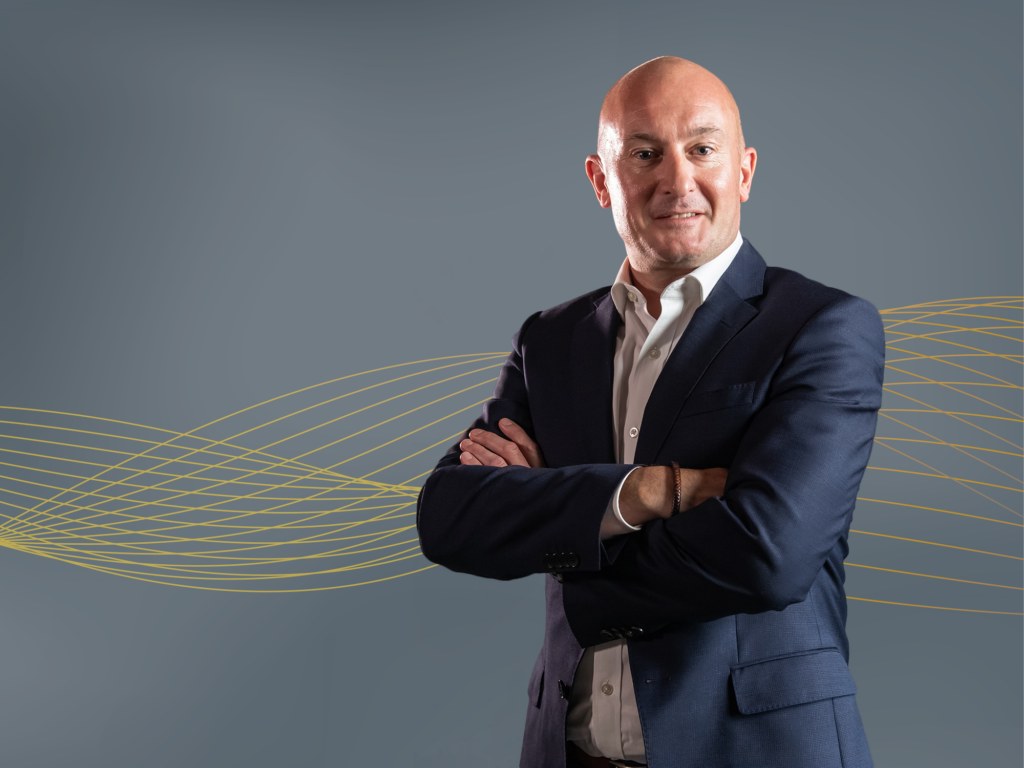
Davis Larssen, CEO Proserv
Proserv will “continue to be in Aberdeen” if it remains “globally effective”, said the firm’s chief executive as he revealed job cuts and a dwindling North Sea order book.
“We’ve just gone through an exercise where I’ve restructured the Proserv leadership globally,” Davis Larssen, chief executive of the Aberdeen headquartered firm, told Energy Voice.
“It’s no secret, we’ve just made a number of people redundant in the UK, Norway and in the Middle East.”
A total of 25 people were let go by the firm during the restructuring programme, resulting in a “leaner, flatter leadership structure”.
The cuts came from the firm’s 800-person strong workforce, and Larssen emphasised the “small percentage” of employees impacted.
And although the UK was only one of the regions impacted by the redundancy round, a nosedive in oil and gas work and delays to renewable energy projects within the North Sea have the potential to drive decision-making going forward.
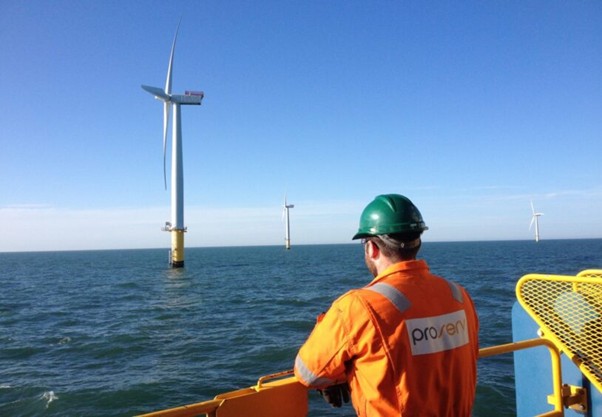
Proserv’s holistic cable monitoring system was deployed at the Dogger Bank wind farm.
“Increasingly, the kind of products we build and supply from the UK – for example, subsea controls – they need to be competitive globally,” Larssen explained.
“So, if we’re competing against people that are building these things in Brazil or Malaysia, for example, we have to demonstrate that our product reliability and quality – and on time delivery and price – is competitive.”
Despite Proserv doing “reasonably well” when competing with suppliers based in regions of high offshore activity, securing work from the UK “continues to be a challenge”.
“It does put the UK under a bit more of a spotlight,” said Larssen.
“Because if you have to send a typical oil and gas service technician on a plane to Brazil to do a job, you’re competing with Brazilian technicians who, in theory, can do the same job.”
Proserv hits out at North Sea oil policy
As the challenge of competing with overseas firms ramps up, the Proserv boss sees little evidence of change “whilst we continue, as a nation, to not invest in the natural resources that still sit within the North Sea.”
Looking at the “short term”, Larssen forecasts his order book to be “predominantly oil and gas,” even as the UK government plans to pass legislation that would outlaw exploration licences in the North Sea.
Under the Labour Party’s plan for UK oil and gas activity, already discovered resources near to existing infrastructure can be exploited via tiebacks, however, the prospect of a new, and licensed, field coming online is not on the cards.
To showcase how spending has shifted, around “45% of our revenue was derived from the North Sea” a decade ago, Larssen explained. Now, it’s “probably 15% North Sea and about 85% in overseas markets,” and this is a result of “the UK market shrinking”.
As a result, firms like Proserv are increasingly looking overseas to secure work. In recent years, Proserv outlined plans to deliver growth in the Gulf of Mexico, and it is now targeting Brazil as well.
UK offshore wind worries
But what about renewables? With government backing in the UK, focusing on cleaner energy, surely the firm that has worked on major offshore wind projects like Dogger Bank could see opportunities in the North Sea?
Apparently not, as projects continue to stall or get scrapped due to a plethora of issues causing headaches for wind developers. Grid connection times leave projects without a route to market, and transmission charges have hampered wind farms in the north of Scotland that secured leases in the 2022 Scot Wind round.
“I would have to say, the renewables transition is going a lot slower than what any of us imagined,” Larssen said.
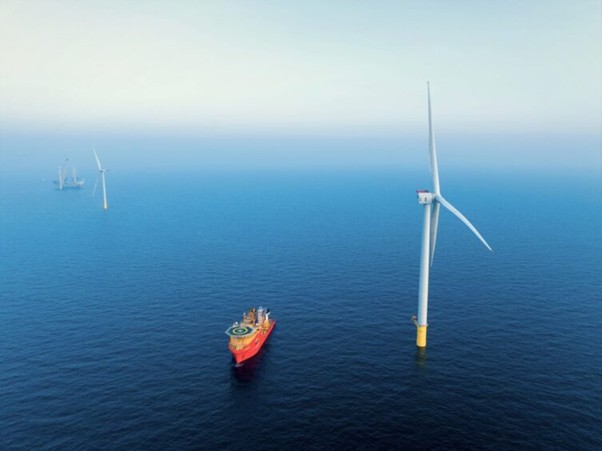

The Dogger Bank offshore wind farm off the coast of Yorkshire.
“I think back to four or five years ago, when ScotWind was first announced, and there was this huge buzz around what we were going to do as a nation, creating this new floating offshore wind energy infrastructure, and how we could be world-leading.
“The reality is in the four years or so since then, we’ve hardly moved forward as a nation, and most of those projects are at risk.”
In light of this, despite Proserv “aggressively trying to get into renewables”, current market conditions make it “nigh on impossible in the UK sector to do that today”.
One major issue Larssen sees with the UK renewable energy market is the country’s decision to “not bring new players into the market”.
‘Mistake’ to block Ming Yang
Earlier this year, the Westminster government blocked Chinese turbine maker Ming Yang from setting up its planned manufacturing site in Scotland.
This has prompted a debate as to whether the government made the right decision when it cited national security concerns as the reason for not allowing the use of Chinese turbines.
“The decision around Ming Yang coming into the UK has been a very topical and public one, and I personally think it’s a mistake,” Larssen commented.
Despite Ming Yang’s plans getting scrapped, the UK is investing in state-backed firm GB Energy, which aims to invest in supply chain companies with technology fit for large-scale deployment.
“I think GB Energy are on the right track,” commented the Proserv boss.
“I think what they are trying to do is not easy. They’ve obviously got certain constraints they have to operate within, but at the moment, I think they are listening, they are learning, they are engaging with lots of companies across the operator base and the supply chain – us included.
“I would say, we’re having some very good, proactive conversations with them.”
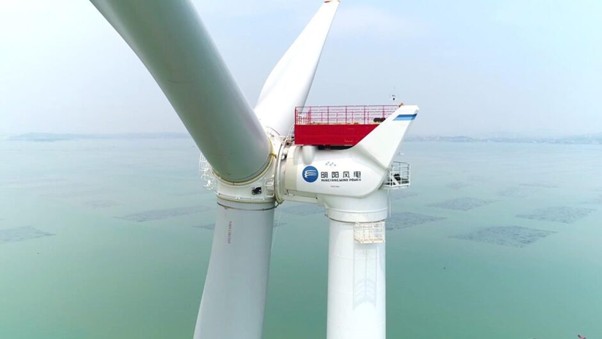

A Ming Yang offshore wind turbine.
His comments come after Conservative politicians branded GB Energy “one of the biggest scams of our generation which is driving away private investment”.
On Monday, the Government Property Agency kicked off the £1.7 million initiative to get GB Energy’s Aberdeen headquarters ready for the firm’s fast-approaching move-in date.
The state-backed firm is planning to host a jobs event in the Granite City next week as it is currently recruiting for eight senior roles set to be based in Aberdeen.
‘Bigger opportunities’ overseas
Despite stumbling blocks causing North Sea renewables projects to stall, Proserv sees the wider renewables market as a key growth area.
Renewables as a whole, but “offshore wind in particular”, stand to offer “big growth opportunities” for the Aberdeen business.
“Whether it’s fixed or floating, as offshore wind gets further offshore and you’re getting into a harsh environment, the need to have turbine agnostic, fully integrated control monitoring systems that you are comfortable are cyber secure – and nobody can access your ability to pull power back to the shore – is critical,” the Proserv boss explained.
“That’s what we’ve been doing in oil and gas for 40 years, and we think we can do it in renewables.”
Currently, mainland Europe and south-east Asia are the “growth markets” Proserv is targeting in the offshore wind market, the chief executive said.
Even after “great success” on UK renewable work, Larssen now thinks the “bigger opportunities” are “more likely to be outwith the UK.”
What is Proserv’s future in Aberdeen?
So, with opportunities presenting themselves in renewables and oil and gas outside of the UK, does it make sense for Proserv to remain headquartered in Aberdeen?
As Energy Voice inquired about the likelihood of Proserv retaining its Aberdeen footprint, Larsen revealed he had been “asked that very same question by a member of staff” in his firm’s Westhill base.
“We’ve had facilities in Aberdeen for the past 40-50 years,” he said.
“I live in Aberdeen, I’ve been with Proserv 16 years, and I’m married to a woman from Aberdeenshire, so this is where my kids were born, this is where they’ve been brought up, so this is home, and this is our headquarters.”

Proserv’s corporate HQ in Westhill, Aberdeen.
He explained the firm has “well-established infrastructure” in the north-east of Scotland.
However, as the “slant” on where business is coming from has shifted to outside of the UK, questions could start being asked about the firm’s north-east presence.
“So, we will continue to be in Aberdeen whilst we continue to be globally effective,” Larssen said.
“For me personally, that means I spend a lot of time traveling in airplanes to go and visit customers, and I haven’t yet got to the point where we have said ‘it shouldn’t be Aberdeen, it should be this place or that place’ because if I moved to London, Dubai of Houston, I would still spend time in a plane going to other parts of the world.”
The Proserv boss did concede that his firm has “a huge emotional attachment to the north-east of Scotland”, which also has a bearing on decision-making. Larssen added: “So, as long as that glue still makes sense, it will continue and there’s no plans to relocate the headquarters to anywhere else to be quite frank.”
Field-proven pressure protection enables faster, lower-emissions path to first oil in the Gulf of America
Proserv, the global controls technology specialist, has helped unlock a commercially viable, infrastructure-led development for Beacon Offshore Energy’s Zephyrus field through the deployment of its High Integrity Pressure Protection System (HIPPS) subsea controls.
Beacon and its partners have signed a production handling agreement to tie the Zephyrus field back to existing subsea infrastructure in the Mars Corridor. By leveraging established facilities, the development is expected to reduce emissions, lower capital expenditure, and accelerate time to first oil.
A critical enabler of this approach is the integration of Proserv’s field-proven HIPPS controls into the nine-mile Zephyrus subsea tieback. Delivered in collaboration with Trendsetter Engineering, a specialist provider of subsea solutions, the HIPPS system allows a high-pressure well to be safely and flexibly connected to lower-pressure infrastructure.
The solution combines Trendsetter’s HIPPS module with Proserv’s SIL 3-rated subsea control system, delivering a highly reliable, localised safety function that automatically shuts in the well in the event of a pressure excursion. This enables operators to manage differing pressure regimes while protecting existing assets and maintaining operational integrity.
Matt Metcalf, Technical Sales Director at Proserv, said:
“Zephyrus is a great example of how infrastructure-led developments can be made both technically robust and commercially compelling. Our HIPPS subsea controls give operators the confidence to tie high-pressure wells into existing networks safely, helping reduce cost, minimise emissions and bring production online faster.”
Designed for use across greenfield, brownfield and infrastructure-led projects, the HIPPS solution can be seamlessly integrated with existing subsea architectures, supporting flexible tieback strategies in deepwater environments.
The Zephyrus development comprises two single-well tiebacks utilising a single HIPPS module with dual flow base capacity, connected to existing deepwater infrastructure. Building on continued success in the Gulf of America, Proserv and Trendsetter plan to deploy the proven HIPPS technology on future deepwater developments across the Americas.”